
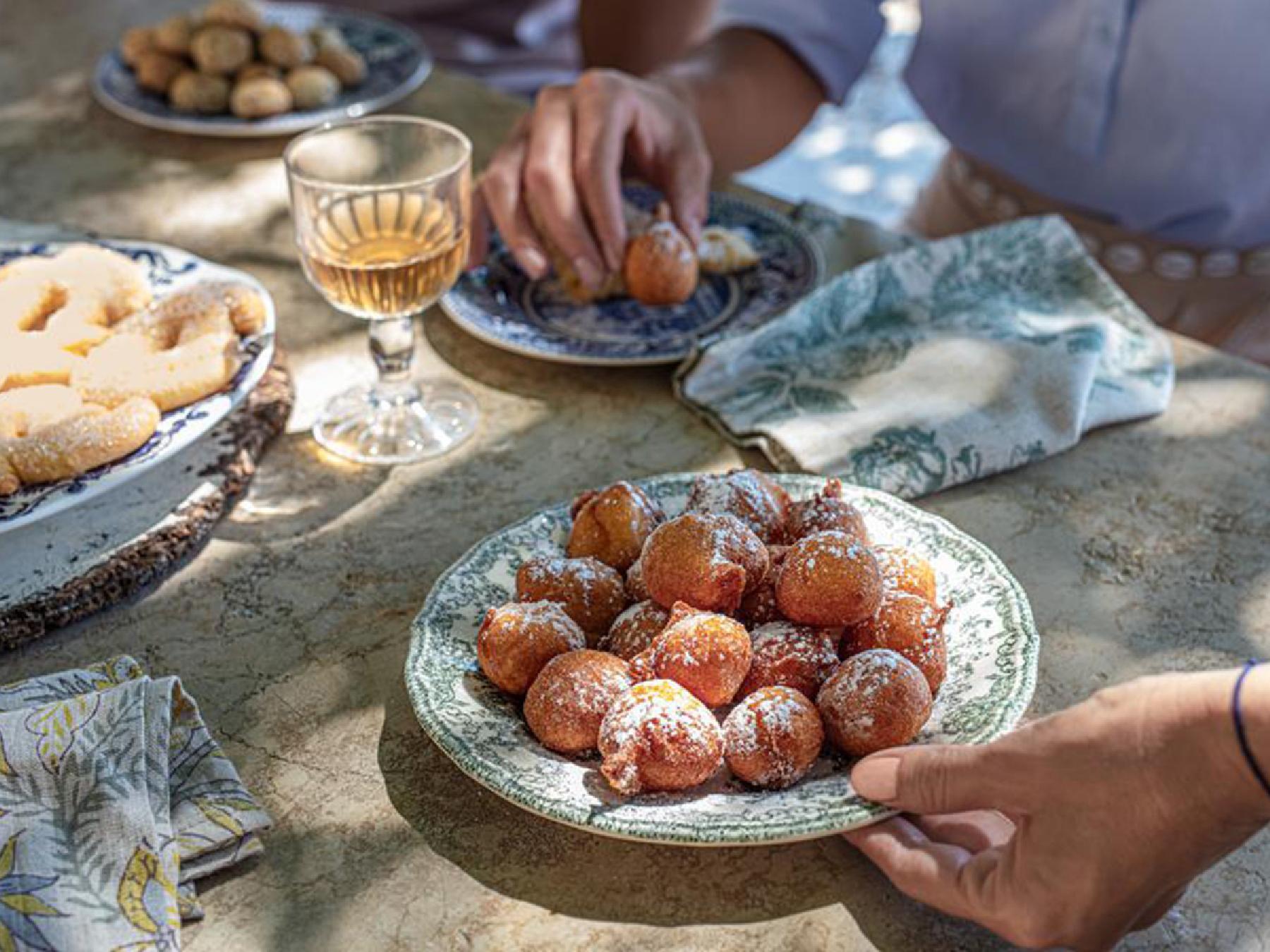


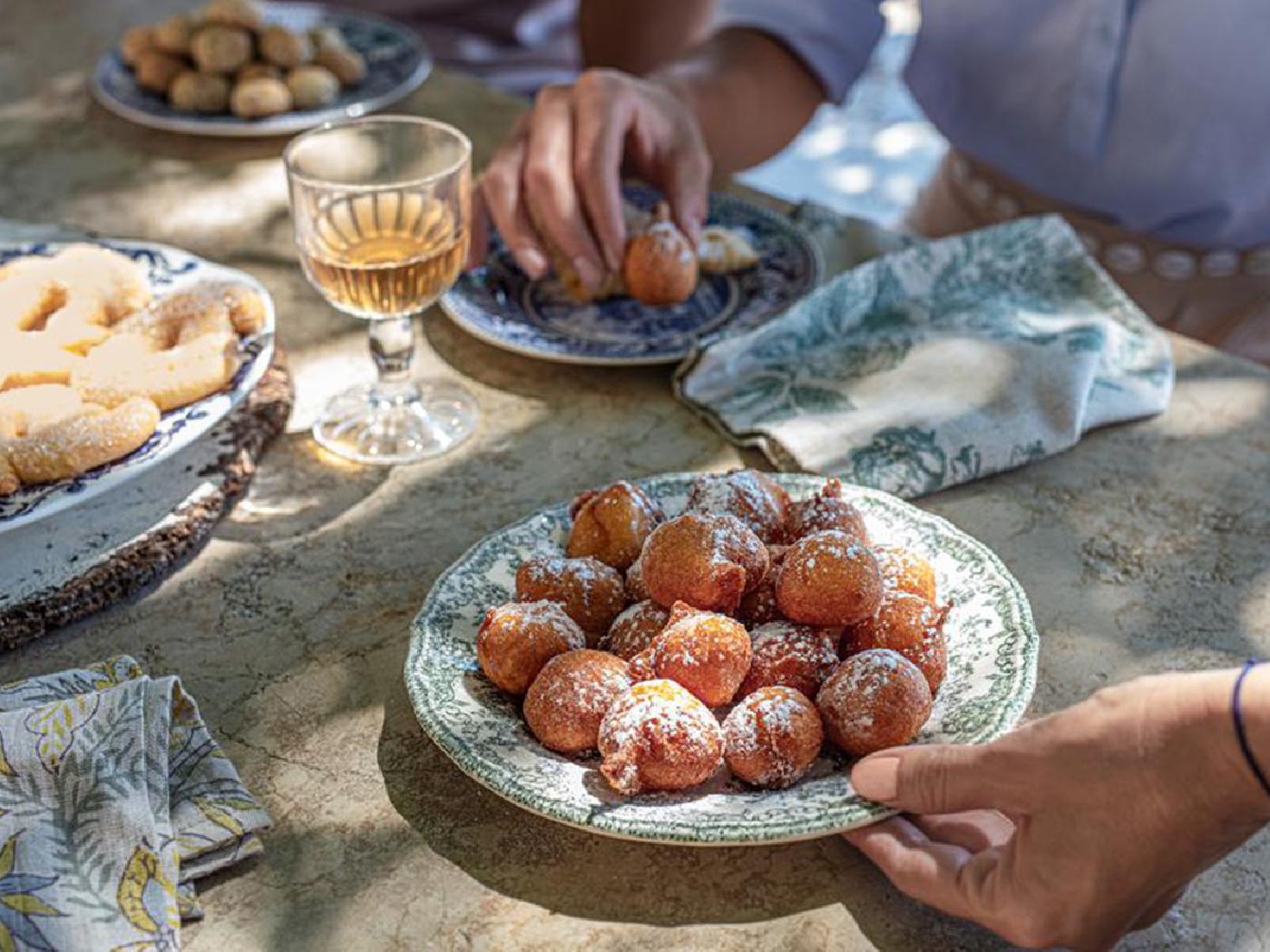
Fritule are among the most recognizable traditional sweets along the Croatian coast and islands. Small, round, and golden, they grew out of a simple idea — to turn modest ingredients into something sweet, quick, and warm, especially during winter and holidays. Today, they’ve found their place in restaurants and konobas year-round, but their roots remain deeply tied to home kitchens and family traditions.
At their core, fritule are fried dough balls, but their charm lies in the details rather than the recipe itself. The dough is made from flour, eggs, and yeast or baking powder, often with a splash of rakija, prošek, or a homemade liqueur — not for the alcohol, but for aroma and a lighter texture. Lemon or orange zest adds freshness, while sugar brings it all together.
Every region, island, and even family has its own version. Some are smaller and denser, others larger and more airy. Some include raisins, others don’t. Some are rolled in sugar, others simply dusted with powdered sugar. But they all share one rule — they’re best eaten while still warm.
There’s also a quiet tradition along the coast: in many restaurants and konobas, fritule are not ordered — they simply arrive. Served as a small gesture, a gift from the kitchen, or a thank-you at the end of a meal. And often, it’s in those unexpected moments that they leave the strongest impression.
Fritule don’t ask for explanation. They’re a small, warm reminder of home cooking, hospitality, and simple pleasure — the kind that stays with you.