
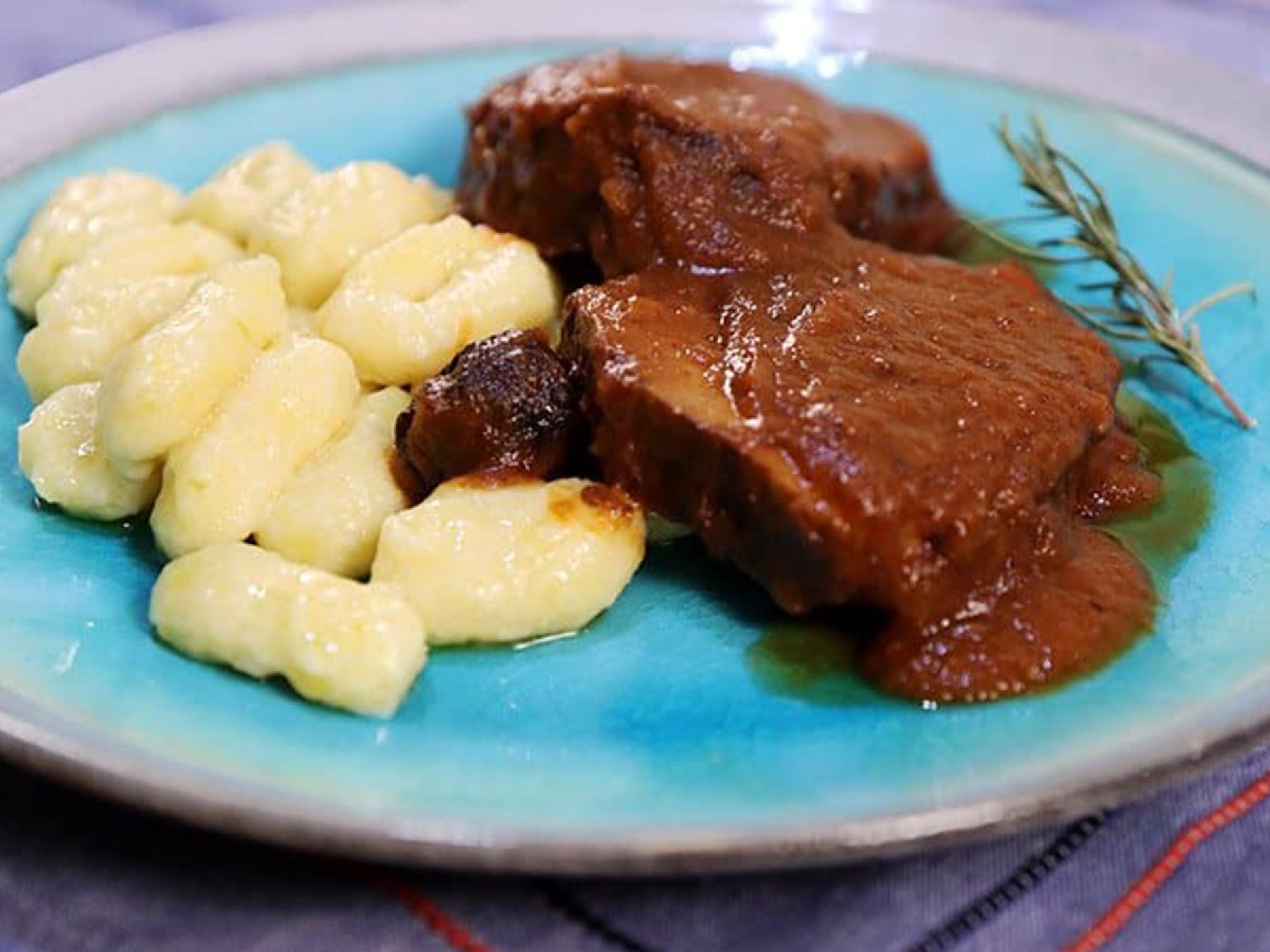


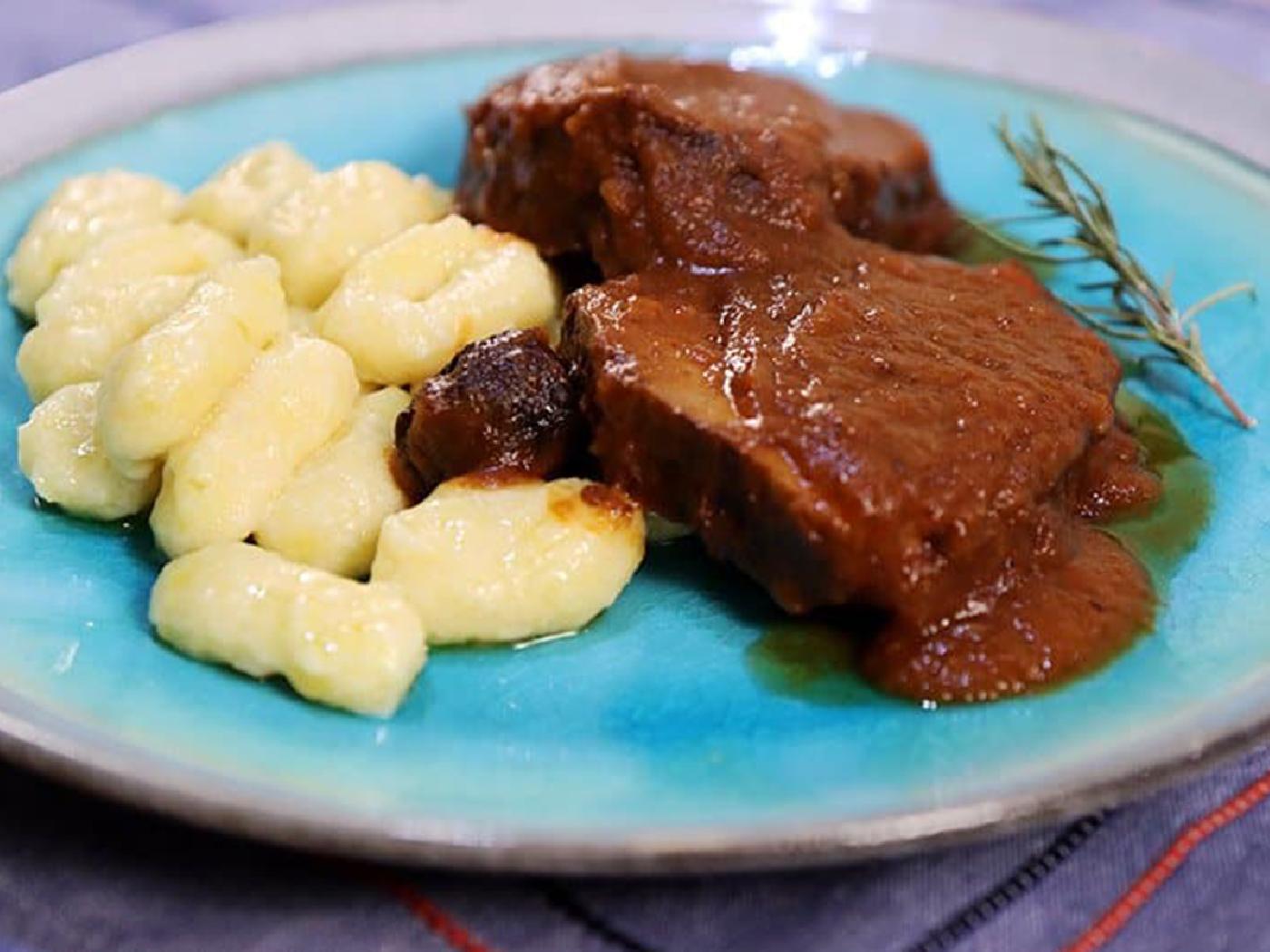
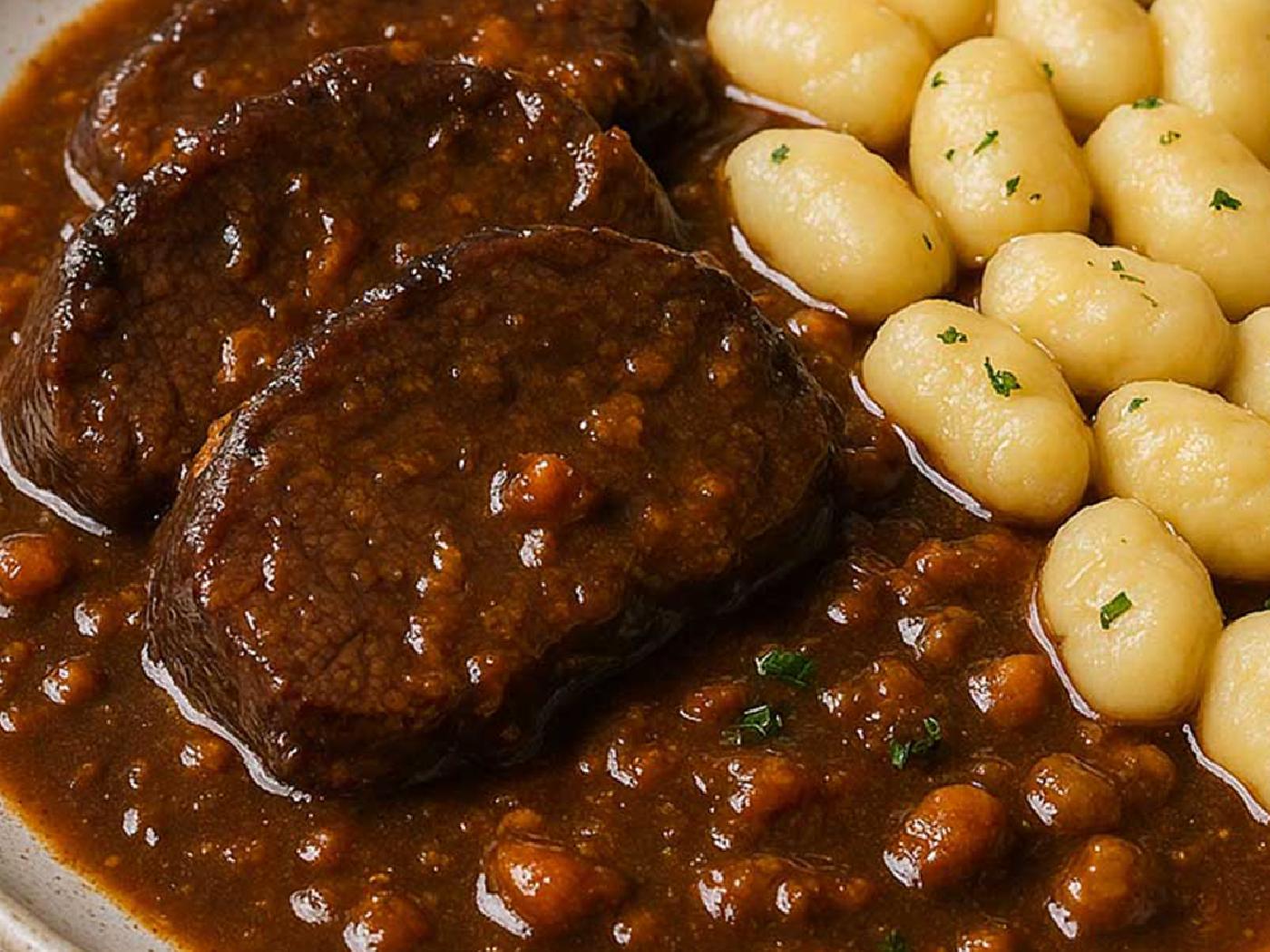
Pašticada is not just a dish. It’s a project — something you don’t prepare on the side, but with time, intention, and a clear desire to treat someone properly. If it’s on the menu, the kitchen is serious.
This Dalmatian classic is traditionally reserved for special occasions: holidays, weddings, long family lunches, and guests you want to impress. It starts with beef, but everything around it is a craft in itself.
The meat is marinated for days in wine, vinegar, vegetables, and spices, often with dried plums or prošek (Dalmatian dessert wine). It’s then larded with garlic and pancetta, seared, and slow-cooked for hours until it becomes so tender it nearly falls apart under a fork. The sauce is dense, slightly sweet, slightly acidic, and deeply layered — the kind you remember.
Every household has its own version. Some lean sweeter, some more acidic; some insist on prošek, others on red wine. But a good pašticada always finds balance. Too heavy — it misses the point. Too sweet — someone overdid it.
It’s traditionally served with homemade gnocchi, because nothing else carries the sauce quite the same way. It’s the kind of dish where the plate is finished with bread, without hesitation.
Pašticada is not something you rush. It asks for time, attention, and a certain quiet at the table. If you see it on the menu, and the restaurant says it’s made “the traditional way” and in small batches — they probably mean it.
A simple rule:
If you come across a good pašticada in Dalmatia — order it. No second thought.